
Traditional Territory of the Lheidli T’enneh First Nation (Prince George).
This initiative installed a commercial freezer for NBCGSS’s Food Bank Program, enabling the Food Bank to safely store food within a quality infrastructure that ensures the program’s long-term sustainability. This investment increased the food bank’s capacity to accept larger quantities of donations and helped them provide more culturally relevant foods to students at UNBC, which can otherwise be difficult for students on campus to access.
Story of Impact
The story below was shared by this initiative as their Most Significant Transformation Story, submitted as part of their final report. It reflects the perspectives and experiences of individuals involved in each initiative.
What Is Changing:
For years, the NBCGSS Food Bank has operated under a fundamental constraint: no cold storage capacity. This single barrier has forced us into crisis mode, same-day pickup and distribution only, turning away donated frozen goods, and limiting our ability to serve graduate students with culturally appropriate food. When PHABC offered $5,000 in Large Scale Innovation funding, we saw an opportunity not just to buy food for one semester, but to permanently transform our operations through strategic infrastructure investment.
The Transformation Underway:
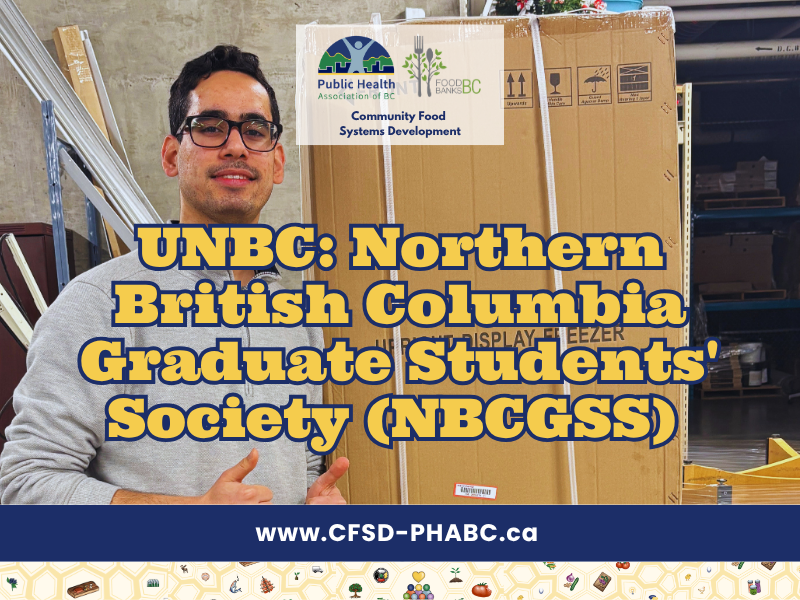
The commercial freezer has been purchased and is awaiting installation by UNBC facilities. Standing beside the still-packaged unit, our team is filled with excitement about what this equipment will enable. Once operational, we’ll finally be able to accept halal meat donations that our Muslim students desperately need. We’ll negotiate with the Salvation Army for increased allocations, targeting 10 meat packages weekly instead of sporadic amounts, since we’ll have a place to store them. We’ll be ready to receive PGPIRG’s summer harvest from the community garden partnership we’ve established.
Rather than spending grant funds on consumable food purchases, we’re investing in lasting infrastructure: the commercial-grade freezer (10-15 year lifespan), a heavy-duty transport wagon purchased to protect volunteer safety, and the partnerships to support sustainable operations. We’ve allocated funds to build collaboration with PGPIRG for fresh vegetable production starting in March 2026, and established a pathway to work with local farmers through the Prince George Farmers Market.
Critically, we’ve created an Assistant Manager position through BC Employment Assistance, 200 hours of support to help shoulder the coordination burden that previously fell entirely on volunteer graduate students juggling academic commitments.
How This Change Came About:
We chose strategic infrastructure over operational spending. Every dollar invested buys 10-15 years of service rather than one semester of food. We’re building partnerships that will compound their impact-our collaboration with PGPIRG Board member Parniya Pekmaiyan will bring fresh, locally-grown vegetables to graduate students during growing seasons for years to come. Parniya is writing an article about our partnership for Over the Edge newspaper (forthcoming online), helping raise awareness about student-led food systems transformation.
We’re also prioritizing volunteer engagement, promoting the food bank as a rewarding learning opportunity that brings student spirit into food security work as a meaningful cause.
Why This Feels Significant:
This grant is fundamentally changing what kind of food bank we can be. We’re moving from scrambling to redistribute whatever we can move in a few hours, to building a dignified, culturally responsive food security program that respects our diverse international graduate student community’s dietary needs-halal options, vegan alternatives, allergen-free choices.
Once the freezer is installed and partnerships are active and ready to be launched in March, we anticipate growing from our current 15-17 students weekly to 25-30+ students because now we can do more trips to Foodbank distribution centres and not worry about storage. The infrastructure we’re building will serve potentially 1,500+ students over the next decade.
Adapting to Emerging Needs:
We’ve learned that international graduate students face barriers beyond just food access challenges, unfamiliarity with Canadian food systems, language barriers, and navigating resources. Our partnership model will address these: PGPIRG will bring fresh produce directly to campus, gift cards will provide access near students’ homes when transportation fails, and our email RSVP system allows students to communicate dietary needs privately and clearly.
Vision Beyond This Grant:
The equipment is purchased and awaiting installation. The partnerships are established and launching in March. Now we’re preparing to operate this enhanced infrastructure sustainably. Our long-term vision includes securing permanent funding for coordinator positions, expanding the PGPIRG collaboration to year-round production through greenhouse partnerships, and formalizing our farmers market relationships to support Northern BC agricultural producers while serving our students.
Heartfelt Thanks:
We extend our deepest gratitude to PHABC and the Ministry of Social Development and Poverty Reduction for believing in our vision. This grant is teaching us that transformational change doesn’t come from bigger food orders-it comes from strategic infrastructure investments that compound their impact year after year, and from partnerships that strengthen our entire community.

Behrouz Danesh (NBCGSS Grants Admin) beside the commercial freezer awaiting installation by UNBC facilities. This equipment represents the transformation from crisis-mode operations to sustainable, dignified food security programming capable of serving graduate students with culturally appropriate food options.

Behrouz Danesh and Parniya Pekmaiyan (PGPIRG Board member) are celebrating the establishment of our collaboration. Starting in March 2026, PGPIRG’s community garden will provide fresh, locally-grown vegetables to NBCGSS Food Bank, creating a sustainable partnership that supports both student food security and campus-based food production.
UNBC Food Security Initiative
Traditional Territory of the Lheidli T’enneh First Nation (Prince George).
The UNBC Food Initiative is a diverse campus food security investment, including:
- Northern British Columbia Graduate Students’ Society (NBCGSS)
- Northern Women’s Centre.
- Office of Indigenous Initiatives (OII)
- Prince George Public Interest Research Group (PGPIRG)
- UNBC Food Research Hub
- UNBC Northern Undergraduate Student Society (NUGSS)
This initiative aimed to enhance collaboration and innovation within campus food systems by funding six UNBC food security initiatives.
Together, these initiatives strengthened campus food storage infrastructure; expanded campus–community partnerships, collaborations, and volunteer engagement; improved food access and distribution models (including food banks, open-access pantries, food boxes, a dry goods store, and a community garden); delivered food literacy workshops and food-focused gatherings; increased the cultural relevance and quantity of food choices; and, enhanced communications and promotion of food security programs and projects.
Project Poster
All posters are downloadable in print format. Original posters were designed at 3ft by 4ft; as such, we advise you to print at a similar ratio to ensure text and images are as accessible as possible.

University of Northern BC Food Security: To enhance collaboration and innovation in campus food systems, six UNBC food security projects…
Interactive Map
Use the interactive map below to see who we funded across the north.
You can filter according to project type: Large-Scale, Ideas Lab, and Rapid Stimulus.


