
Traditional Territory of the Lheidli T’enneh First Nation (Prince George).
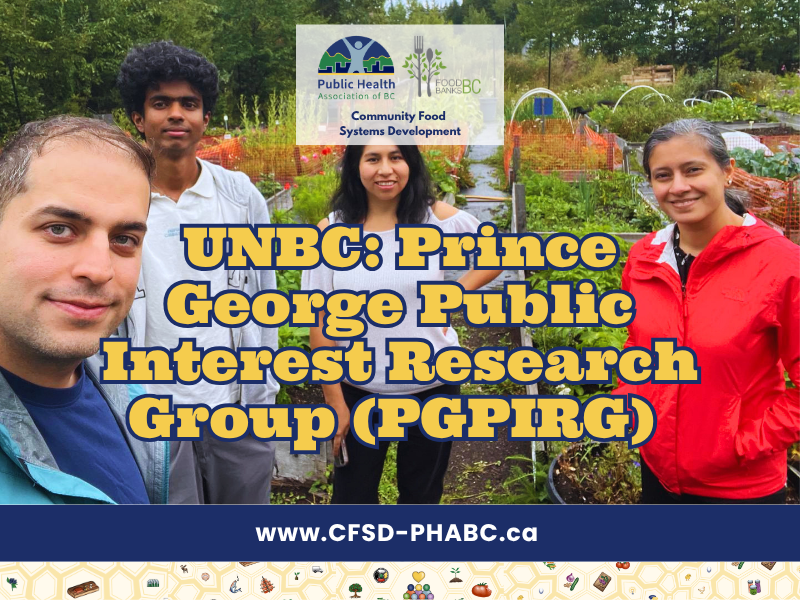
This initiative supported PGPIRG in advancing their food security programs, including The Good Food Box, the Good Store, and their student-community food production gardens. Staffing capacity was increased to develop a coordinated food security strategic plan, design and launch a new student and community Good Food Box program, and improve the existing Good Store and gardens. The initiative also facilitated the purchase of equipment, tools, and infrastructure to support programming, including upgrades and expansions to their student-community garden plots.
Story of Impact
The story below was shared by this initiative as their Most Significant Transformation Story, submitted as part of their final report. It reflects the perspectives and experiences of individuals involved in each initiative.
In this conversation, Lizeth and Roanne invited Jhoan to reflect on the most significant transformation emerging from PGPIRG’s food security project at UNBC, both for the organization and the wider community, as part of a final reporting process. Jhoan described PGPIRG as a student‑driven non‑profit based at UNBC, with most members being students and some community members, and outlined how the project focused on improving food security on campus while maintaining strong links with the broader Prince George community.
The organization managed a roughly 50‑bed community garden, with plots allocated to community members without access to land, to UNBC students, and to production beds intended to generate some income to sustain PGPIRG’s programs. A core emphasis was on capacity building: providing garden space, seeds, and hands‑on support from a coordinator so that people could learn gardening skills rather than only receiving food.
Over the previous two years, the management of the garden shifted from several coordinators to a leaner model with a single coordinator and stronger external partnerships. PGPIRG worked closely with the undergraduate and graduate food banks, which contributed to coordinator wages, seeds, and soil amendments, while involving their own members in gardening activities.
An important development was hiring a consultant with deep gardening and administrative experience—someone connected to the garden’s early days and trained in biology and administration—to develop both a gardening plan and a business plan to extend the impact of current funding. Part of this approach involved selling a portion of the harvest to offset future costs, alongside exploring volunteer insurance to better protect the volunteers who were central to the project, given that many local gardens relied only on waivers.
Jhoan also explained efforts to revive the Good Food Box program, including hiring a coordinator to design a business plan for selling boxes containing fresh produce and locally made items such as honey, candles, and roasted coffee. This work aimed to address food insecurity while supporting local farmers and small businesses, though the team encountered challenges around higher local prices and regulatory requirements for including meat.
At the organizational level, a recent leadership transition required Jhoan to move from a narrower focus on The Good Store to overseeing a broader food security portfolio, supported by internal workshops to clarify PGPIRG’s mission and co‑develop a food security strategy. The process of navigating diverse perspectives, building relationships, and aligning visions within a diverse team emerged as a key transformation for both leadership and the organization as a whole.
UNBC Food Security Initiative
Traditional Territory of the Lheidli T’enneh First Nation (Prince George).
The UNBC Food Initiative is a diverse campus food security investment, including:
- Northern British Columbia Graduate Students’ Society (NBCGSS)
- Northern Women’s Centre.
- Office of Indigenous Initiatives (OII)
- Prince George Public Interest Research Group (PGPIRG)
- UNBC Food Research Hub
- UNBC Northern Undergraduate Student Society (NUGSS)
This initiative aimed to enhance collaboration and innovation within campus food systems by funding six UNBC food security initiatives.
Together, these initiatives strengthened campus food storage infrastructure; expanded campus–community partnerships, collaborations, and volunteer engagement; improved food access and distribution models (including food banks, open-access pantries, food boxes, a dry goods store, and a community garden); delivered food literacy workshops and food-focused gatherings; increased the cultural relevance and quantity of food choices; and, enhanced communications and promotion of food security programs and projects.
Project Poster
All posters are downloadable in print format. Original posters were designed at 3ft by 4ft; as such, we advise you to print at a similar ratio to ensure text and images are as accessible as possible.

University of Northern BC Food Security: To enhance collaboration and innovation in campus food systems, six UNBC food security projects…
Interactive Map
Use the interactive map below to see who we funded across the north.
You can filter according to project type: Large-Scale, Ideas Lab, and Rapid Stimulus.


