
Traditional Territory of the Lheidli T’enneh First Nation (Prince George).
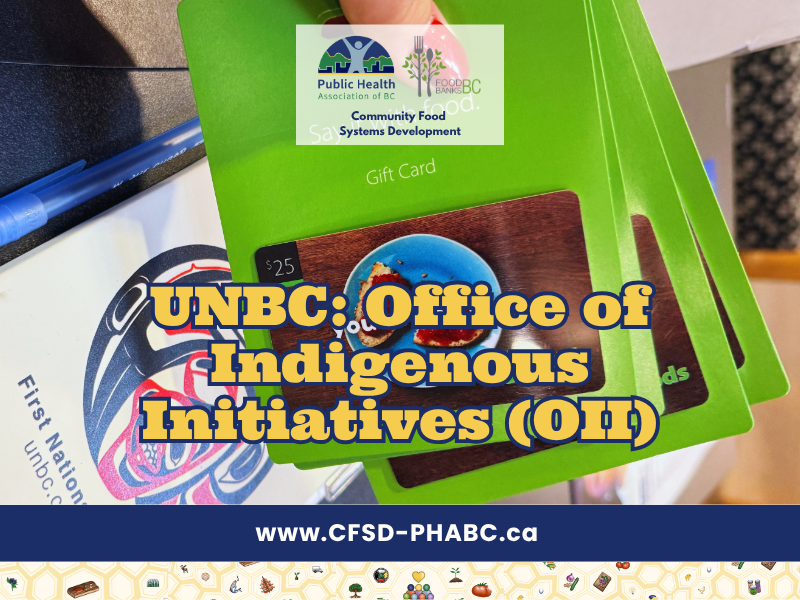
This initiative enhanced the reach, coordination, and institutional capacity of existing programs by supporting the First Nations Centre Student Food Program, monthly potlucks, the Campus Cousins (Indigenous student-led) program, and OII Community Connections events, which were strengthened for the remainder of the 2025-26 academic year. It also supported pre-planning activities for strategic initiatives scheduled for the 2026-27 academic year.
Story of Impact
The story below was shared by this initiative as their Most Significant Transformation Story, submitted as part of their final report. It reflects the perspectives and experiences of individuals involved in each initiative.
While the core delivery model for food supports remained consistent, the most significant change resulting from this grant was the increased reach, coordination, and institutional capacity of existing initiatives. Through the First Nations Centre (FNC) Student Food Program, a higher number of grocery gift cards were distributed, and Indigenous students continued to access free, low-barrier frozen perishables and non-perishable foods in ways that reduced stigma and improved accessibility. These supports were delivered through trusted relationships and established roles within the FNC, reinforcing dignity and ease of access.
In parallel, the FNC Monthly Potlucks and Campus Cousins events further strengthened the role of food as a shared cultural and relational practice rather than solely an emergency support. These gatherings supported community connection, intergenerational interaction, and culturally safe spaces on campus. Complementary community connection events expanded this impact by strengthening respectful relationships between the university and Indigenous community partners through shared meals and opportunities for knowledge exchange.
This change came about because the grant enhanced stability, coordination, and responsiveness across initiatives that are often delivered independently. Consistent funding allowed the First Nations Centre and the Office of Indigenous Initiatives (OII) to plan food access and community gatherings more intentionally, align activities with student and community needs, and make timely adjustments based on observation and feedback.
This coordinated approach reflects Indigenous values of reciprocity, respect, and relational accountability, and supported more cohesive program delivery. Adaptation was a key outcome of the initiative. Food offerings were adjusted in response to observed use patterns and accessibility considerations, while events evolved to prioritize flexibility, cultural relevance, and ease of participation. These adaptations improved program fit and strengthened trust, demonstrating responsiveness to emerging needs rather than reliance on rigid implementation models.
From an evaluation perspective, this pilot demonstrated that integrating food access, communal meals, and relationship-based events produces greater impact than isolated interventions. The initiative provides evidence of a viable, values-aligned approach to supporting food security, community wellbeing, and cultural connection in a post-secondary setting.
The most significant change is that staff within the First Nations Centre and the Office of Indigenous Initiatives are now better positioned to co-deliver initiatives with Indigenous students, and Indigenous student leaders have access to modest budgets that enable them to plan and host community-centred events.
UNBC Food Security Initiative
Traditional Territory of the Lheidli T’enneh First Nation (Prince George).
The UNBC Food Initiative is a diverse campus food security investment, including:
- Northern British Columbia Graduate Students’ Society (NBCGSS)
- Northern Women’s Centre.
- Office of Indigenous Initiatives (OII)
- Prince George Public Interest Research Group (PGPIRG)
- UNBC Food Research Hub
- UNBC Northern Undergraduate Student Society (NUGSS)
This initiative aimed to enhance collaboration and innovation within campus food systems by funding six UNBC food security initiatives.
Together, these initiatives strengthened campus food storage infrastructure; expanded campus–community partnerships, collaborations, and volunteer engagement; improved food access and distribution models (including food banks, open-access pantries, food boxes, a dry goods store, and a community garden); delivered food literacy workshops and food-focused gatherings; increased the cultural relevance and quantity of food choices; and, enhanced communications and promotion of food security programs and projects.
Project Poster
All posters are downloadable in print format. Original posters were designed at 3ft by 4ft; as such, we advise you to print at a similar ratio to ensure text and images are as accessible as possible.

University of Northern BC Food Security: To enhance collaboration and innovation in campus food systems, six UNBC food security projects…
Interactive Map
Use the interactive map below to see who we funded across the north.
You can filter according to project type: Large-Scale, Ideas Lab, and Rapid Stimulus.


