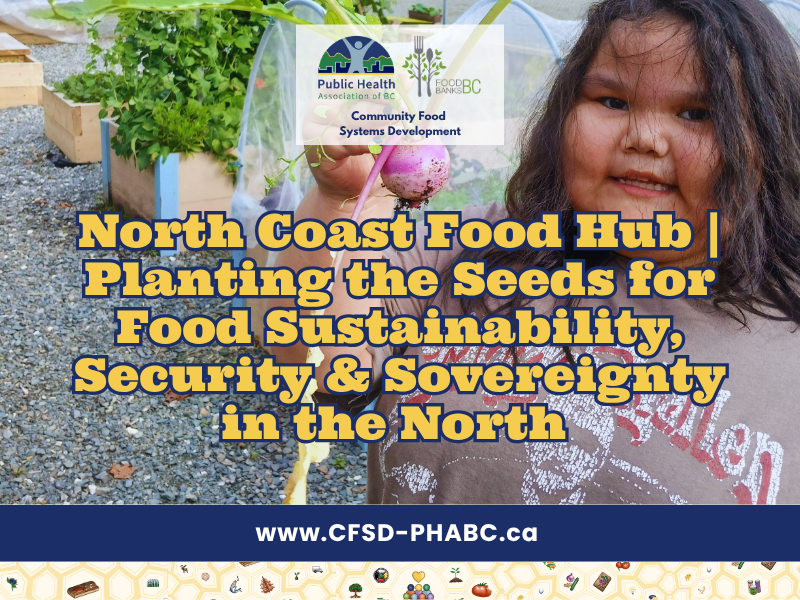
Planting the Seeds for Food Sustainability, Security & Sovereignty in the North
Traditional Territory of the Ts’msyen Nation (Prince Rupert).
This initiative is led by Ecotrust Canada and School District 52, in partnership with the Gitmaxmak’ay Nisga’a Society and the Metlakatla Development Corporation, to establish and expand elements of a school-community food network. This network includes production greenhouses and gardens at four school sites, a School District 52 community commercial kitchen for food and seafood processing, community and K-12 curriculum education programs, regional distribution networks, and local seafood production and distribution initiatives aimed at strengthening food security and sovereignty in Prince Rupert and nearby communities.
The food produced supports the School District 52 meal programs and benefits students, families, and community members. The initiative fosters many local and regional partnerships and is gaining momentum towards a developing North Coast Food Hub, which explores large-scale composting and soil building for the region, developing a community food market for year-round local sales, and securing fresh salmon for all schools in SD52 meal programs.
You can read more about their initiative in Ecotrust’s publications, North Coast Food Hub and Sharing the Harvest: Dianne and the North Coast Food Hub.
Ecotrust
School District 52
Story of Impact
The story below was shared by this initiative as their Most Significant Transformation Story, submitted as part of their final report. It reflects the perspectives and experiences of individuals involved in each initiative.
The most significant change from this initiative has been the creation and expansion of hands-on food-growing spaces that connect students, schools, and the wider community to local, healthy food. With support from PHABC’s Large Scale Innovation grant, we invested in greenhouses at Conrad and Pineridge Elementary Schools, built raised beds at five schools, activated underused school growing infrastructure, and are in the process of constructing a large community greenhouse and outdoor growing beds at Westview School. These spaces support student learning, school meal programs, and lay the groundwork for longer-term community engagement and local food access.
High school students at Charles Hays Secondary have started a garden club, supported by PHABC Rise Up volunteers, giving them leadership opportunities and hands-on experience. Elementary students explore gardening through classroom-linked learning sessions. We are beginning to work with Indigenous partners, including the Wap Sigatgyet Language Authority, to integrate Sm’algyax language into garden spaces (translations are still in progress), and are collaborating with Metlakatla on shared infrastructure and planning for the Westview Community Garden. These partnerships help bring Indigenous leadership and culture into the project.
This initiative has strengthened connections across the community. We hosted our first Symposi-Yum in September 2025 to introduce the project, and we’re now planning a weekly community market running from June to September at a local school. Partnerships with local businesses, organizations, and the City of Prince Rupert have grown, helping align local food initiatives with broader community goals.
The impact of these changes is already visible: students are learning where their food comes from, gaining practical skills, and building confidence and a sense of ownership over growing spaces. Schools can integrate locally grown food into meals, and the community benefits from increased access to fresh, culturally meaningful foods.
Looking ahead, we plan to continue expanding greenhouse infrastructure, strengthen community and Indigenous partnerships, and explore new opportunities such as shared use of the fish processing kitchen currently in development, a local compost and soil-making operation, and growth of our community market. These efforts will increase food literacy and engagement with local food systems while creating accessible opportunities for connection, celebration, and learning across generations.
Through the North Coast Food Hub, we aim to provide long-lasting benefits by addressing food insecurity, building shared infrastructure, and supporting local food production. A portion of the food grown in the greenhouses will go to school meal programs, community service organizations, and other local groups, improving access to healthy, culturally meaningful food.
Programming in schools and for the broader community will foster skills, excitement, and stronger connections between youth, land, and food. By centralizing resources and creating spaces for collaboration, the Hub will strengthen community pride, cultural connections, and shared stewardship, supporting a vibrant, resilient, and community-led approach to healthy food, education, and economic opportunity along the North Coast.
Summer 2025 footage of our Canada Summer Jobs student, Jayne, in the future food forest area at Roosevelt Elementary School, where she was tasked with site cleanup and preparing a safe, accessible learning space for students.

North Coast Food Hub/ Planting the Seeds for Food Sustainability, Security, and Sovereignty in the North: September 2025 – Students at Conrad Elementary School having fun while helping to clean up the garden space, supporting the development of a safe, accessible learning garden.

North Coast Food Hub/ Planting the Seeds for Food Sustainability, Security, and Sovereignty in the North: September 2025 –Students actively engaged in harvesting potatoes from the school garden at Charles Hays Secondary School.

North Coast Food Hub/ Planting the Seeds for Food Sustainability, Security, and Sovereignty in the North: September 2025 – New garden bed infrastructure at Conrad Elementary School, expanding hands-on growing opportunities for students.

North Coast Food Hub/ Planting the Seeds for Food Sustainability, Security, and Sovereignty in the North: September 2025

North Coast Food Hub/ Planting the Seeds for Food Sustainability, Security, and Sovereignty in the North: October 2025 – Charles Hays Secondary School Foods class learning to make pickles using garlic, dill, and cucumbers harvested from the school garden, supporting hands-on food skills and healthy eating.

North Coast Food Hub/ Planting the Seeds for Food Sustainability, Security, and Sovereignty in the North: November 2025 – Together with students, we planted more than 1,400 garlic cloves at multiple schools across Prince Rupert and in Metlakatla.

North Coast Food Hub/ Planting the Seeds for Food Sustainability, Security, and Sovereignty in the North: December 15th, 2025 – Fresh basil, tomatoes, and peppers harvested from the greenhouse at Charles Hays Secondary School, going directly to the Foods class for hands-on learning and healthy eating.
Project Poster
All posters are downloadable in print format. Original posters were designed at 3ft by 4ft; as such, we advise you to print at a similar ratio to ensure text and images are as accessible as possible.

Planting the Seeds for Food Sustainability, Security, and Sovereignty on the North Coast: This project pilots school and community…
Interactive Map
Use the interactive map below to see who we funded across the north.
You can filter according to project type: Large-Scale, Ideas Lab, and Rapid Stimulus.


