
Traditional Territory of the Ts’msyen Nation (Prince Rupert).
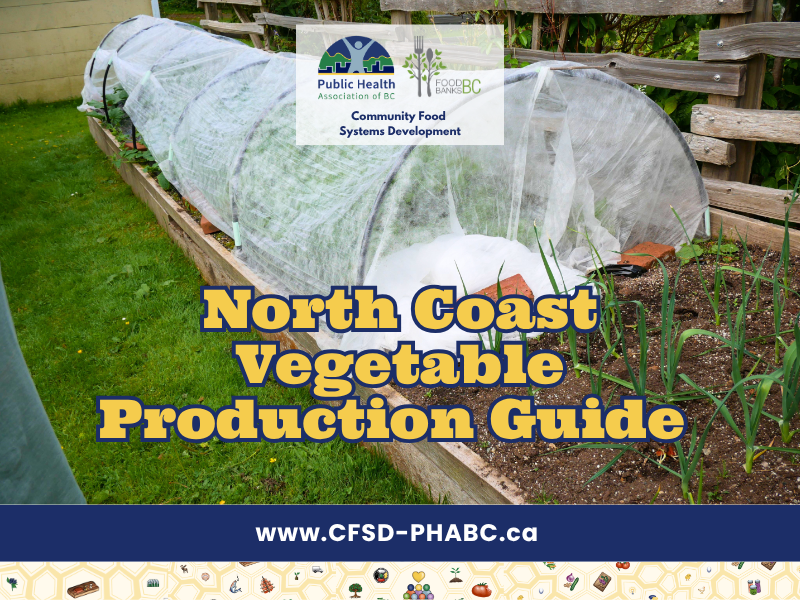
Led by First United Church and Rainbow End Farm in Prince Rupert, the initiative produced “ Growing Food on the BC North Coast: From Gardens to Small Farms” a written guide to vegetable production specific to the climatic, geographical, and cultural conditions of British Columbia’s north coast area. Additionally, based on the author’s 50+ years in agriculture and teaching, the book also provides a philosophical and practical background to the development of an agricultural economy on the coast.
You can purchase the Growing Food on the BC North Coast: From Gardens to Small Farms book here.
Story of Impact
The story below was shared by this initiative as their Most Significant Transformation Story, submitted as part of their final report. It reflects the perspectives and experiences of individuals involved in each initiative.
The most significant change resulting from this grant is the development of a regionally grounded body of work that reframes food growing on the North Coast as both feasible and relevant to community health. Rather than producing a generalized gardening guide, the project advances the understanding that successful food production is closely tied to local climate, land, and social conditions. I expect a shift in how gardening and small-scale food production are discussed locally—from being viewed as impractical or niche to being recognized as a legitimate contributor to food security, resilience, and well-being.
The book’s content was developed through interviews with successful gardeners and farmers and my experiences in agriculture over the past 50 years. Most importantly, my development of Rainbow End Farm in Prince Rupert provided many key lessons in the art and science of coastal vegetable production. Much mainstream gardening and farming guidance assumes warmer, drier climates and longer growing seasons. When applied in coastal environments, this often leads to frustration, wasted resources, and disengagement.
By documenting approaches that are suited to cool, wet, and short-season conditions, the project addresses a structural gap in access to appropriate information. From a public health perspective, access to relevant and usable knowledge can be understood as a social determinant that influences who is able to participate in food production and who is excluded.
The project is also shaped by an awareness of Indigenous food sovereignty and its relevance to public health and equity. Rather than treating food growing solely as a technical activity, the work situates it within broader relationships to land, history, and decision-making. It acknowledges that Indigenous Peoples on the North Coast sustained complex food systems long before colonial settlement, and that contemporary food sovereignty movements emphasize control over food systems, land use, and cultural continuity.
The project does not attempt to document or replicate Indigenous practices, but seeks to complement these broader conversations by supporting locally grounded, non-extractive approaches to food production.
This work feels significant because it supports prevention-oriented and upstream approaches to health. When people are better equipped to grow food in ways that align with their environment, they are more likely to engage in gardening, share knowledge, and participate in community-based food initiatives. Over time, this can contribute to improved access to fresh foods, strengthened social connections, and reduced vulnerability to supply disruptions—outcomes that align with public health goals related to resilience and health equity.
The vision beyond this grant is that the completed book serves as a foundation for broader educational and policy-relevant work. This includes supporting community learning, informing discussions around small-scale agriculture and land use, and contributing a practical, place-based perspective to conversations about local food systems in coastal British Columbia. The long-term aim is to support food systems that are resilient, equitable, and grounded in local realities.
Project Poster
All posters are downloadable in print format. Original posters were designed at 3ft by 4ft; as such, we advise you to print at a similar ratio to ensure text and images are as accessible as possible.

North Coast Vegetable Production Guide: From Gardens to Small Farms: The project will produce a written guide to vegetable production specific…
Interactive Map
Use the interactive map below to see who we funded across the north.
You can filter according to project type: Large-Scale, Ideas Lab, and Rapid Stimulus.


